
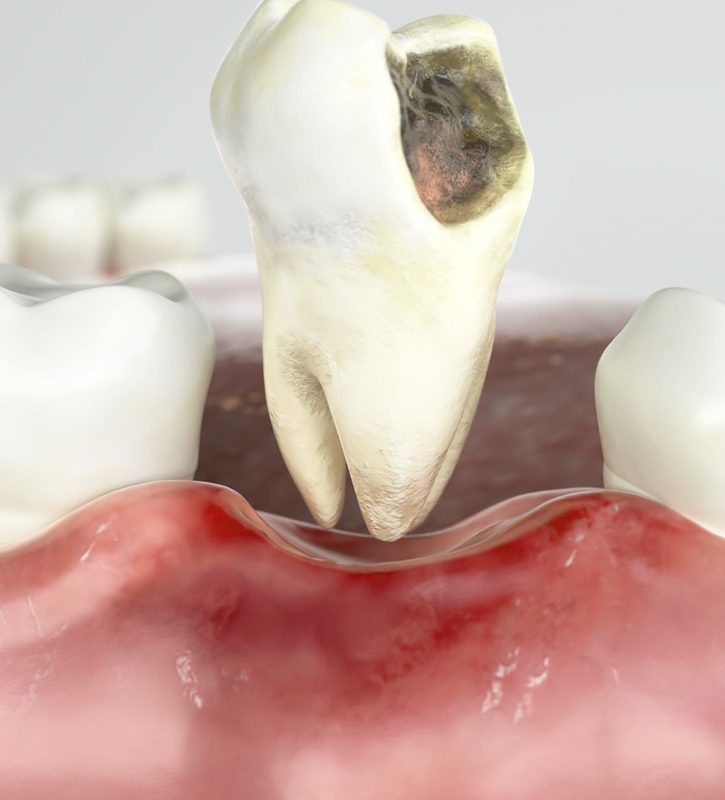
Your tooth may need to be removed for a multitude of reasons, including orthodontic considerations, extensive decay, gum disease, trauma, and more. For your tooth extraction, your dentist will work with you to determine the best anesthetic option to ensure treatment is done as safely and comfortably as possible.
You may require a tooth extraction if you experience any of the following:
Your teeth will be numbed with local anesthesia before beginning extraction. Your specialist will expose the tooth by creating small cuts into gum tissue. A forceps tool is used to extract the tooth effectively. After the tooth has been extracted, gauze will be placed on top of the extraction site to help prevent bleeding. You may feel slight pain and soreness afterward as the area heals.
Third molars, more commonly known as wisdom teeth, are your last teeth to emerge and are often associated with complications. When your wisdom teeth become impacted, infected, or likely to damage other teeth, extraction is often the healthiest option.
The wisdom teeth are the final four molars located in the back of the mouth. If your back molars are sensitive and painful, this may be a sign that you need your wisdom teeth extracted. To determine whether removal is needed, we will take 3-D images of your teeth. Early prevention is one of the best ways to avoid future oral health issues.
Impacted teeth may be trapped beneath gum tissue or bone and unable to erupt properly. Surgical exposure can help access the impacted tooth, reduce discomfort, and support proper treatment planning.
A soft-tissue graft is sometimes recommended to bolster the gum tissue in a specific area of the mouth. This is typically done if you are experiencing gum recession, root exposure, or to prevent the development of soft-tissue-related issues.
For more information about any of these dentoalveolar surgery procedures or to schedule a consultation, contact Modern Dentistry of Jupiter today.
Call us at (561) 621-5053 or book online to schedule your visit.
Choosing the right dental provider is a big decision, and hearing directly from real patients makes all the difference.


 Trustindex verifies that the original source of the review is Google. Trustindex verifies that the original source of the review is Google. Trustindex verifies that the original source of the review is Google. Trustindex verifies that the original source of the review is Google. Trustindex verifies that the original source of the review is Google. Trustindex verifies that the original source of the review is Google.
 Trustindex verifies that the original source of the review is Google.